Games are good for you.

The Mind and Body Connection of Playing Video Games
Most people think of video games as just a fun way to pass the time, but they actually involve a lot more than that. When you play a game, your mind and body are working together the whole time. You are thinking, reacting, moving, and managing your emotions all at once. Whether you are exploring a huge open world, solving puzzles, or playing against other people online, gaming is a full mind-and-body experience.
One of the easiest ways to see this connection is through hand-eye coordination. Your eyes take in what is happening on the screen, your brain processes it, and your hands respond through the controller, keyboard, or mouse. In fast-paced games, you might need to react instantly. In slower games, you may need to be more careful and precise. Either way, your brain and body are constantly working as a team.
Reaction time is another big part of gaming. A lot of games ask you to make quick choices, sometimes in just a second or two. You spot a problem, make a decision, and act on it right away. The more you play, the better you often get at responding quickly and accurately. That is part of what makes games so engaging. You can actually feel yourself improving over time.
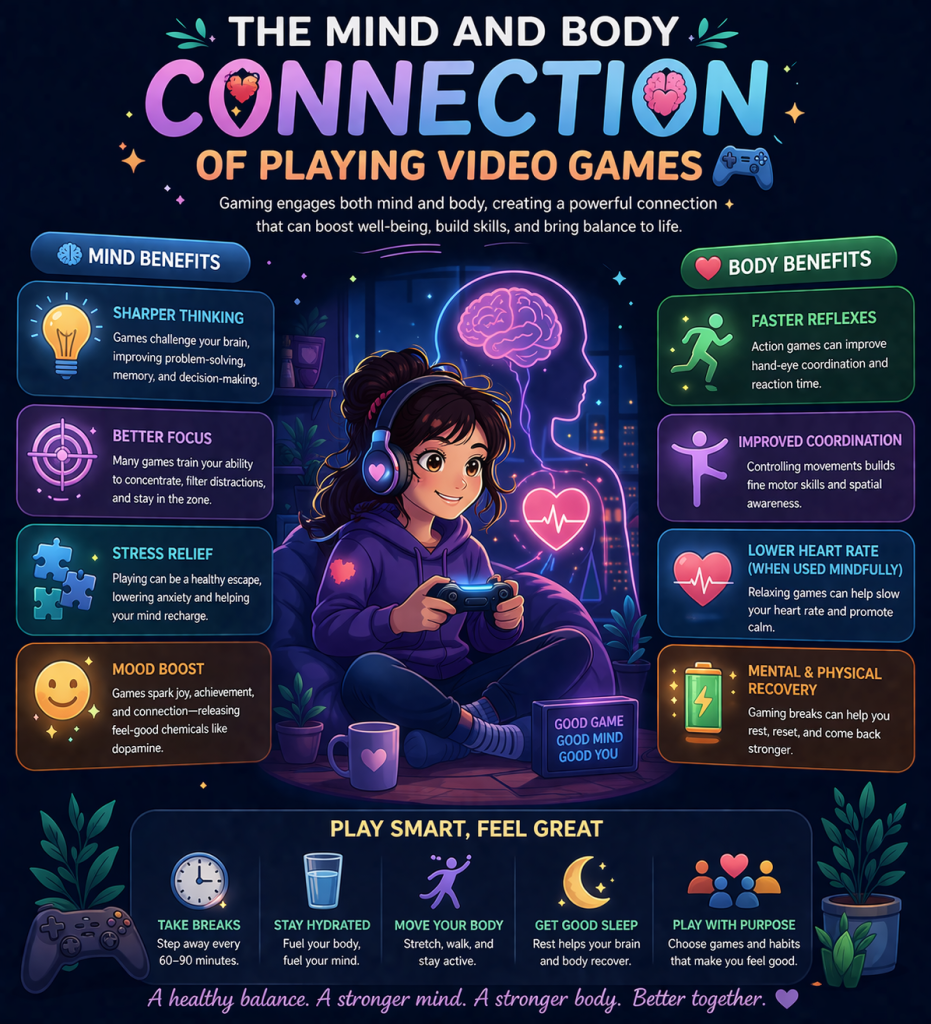
Your emotions matter too. Anyone who has played a difficult level or a competitive match knows that games can bring out excitement, stress, frustration, and joy. Those feelings do not just stay in your head. They show up in your body too. You might tense your shoulders, hold your breath, or feel your heart start racing. On the other hand, when you are calm and focused, you usually play better. Your mindset can affect your body, and your body can affect how you play.
Physical comfort also makes a difference. Gaming may not look like a physical activity in the usual sense, but sitting too long or using bad posture can leave you feeling sore and tired. Eye strain, stiff shoulders, and wrist pain can make it harder to focus and enjoy the game. That is why breaks, stretching, and a comfortable setup can go a long way.
How Video Games Can Help Students Learn
Video games can also be helpful for students. A lot of games build skills that carry over into learning, like problem-solving, memory, focus, and adaptability. Players often have to follow instructions, recognize patterns, and make decisions based on what is happening around them. Those are all useful skills inside and outside the classroom.
Some games are made specifically to teach subjects like math, science, reading, or history. But even games that are not labeled educational can still help people learn. Strategy games can teach planning, puzzle games can improve logic, and story-based games can strengthen reading and comprehension. Multiplayer games can also help students practice communication and teamwork.
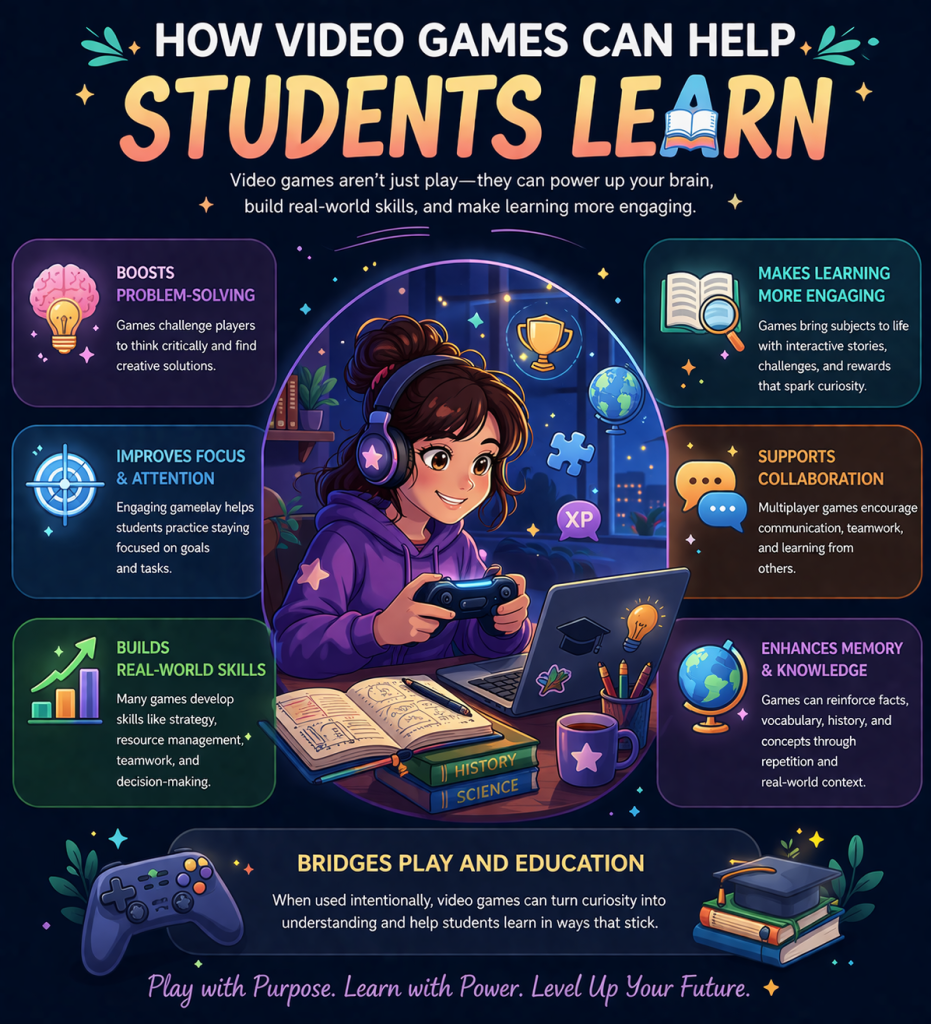
Another reason games can support learning is that they make it active. Instead of just reading or listening, students are involved. They are testing ideas, solving problems, and learning from mistakes as they go. That kind of hands-on experience can make lessons feel more interesting and easier to remember.
Games also teach persistence. You do not usually succeed on the first try, and that is part of the process. Players learn to keep going, adjust their approach, and improve with practice. That kind of mindset can be really valuable in school and in life.
How Games Can Be Good for the Soul
Games can also be good for the soul in a simple, human way. They can bring comfort, joy, and a sense of escape when life feels stressful or overwhelming. Sometimes it just feels good to step into a different world for a while, especially one that feels familiar, creative, or exciting.
They can also help people feel connected. Playing with friends, laughing during a chaotic match, or sharing a favorite game with someone else can create real memories. Even single-player games can leave a lasting impact through their stories, characters, and atmosphere. A game can make you feel relaxed, inspired, or even understood.
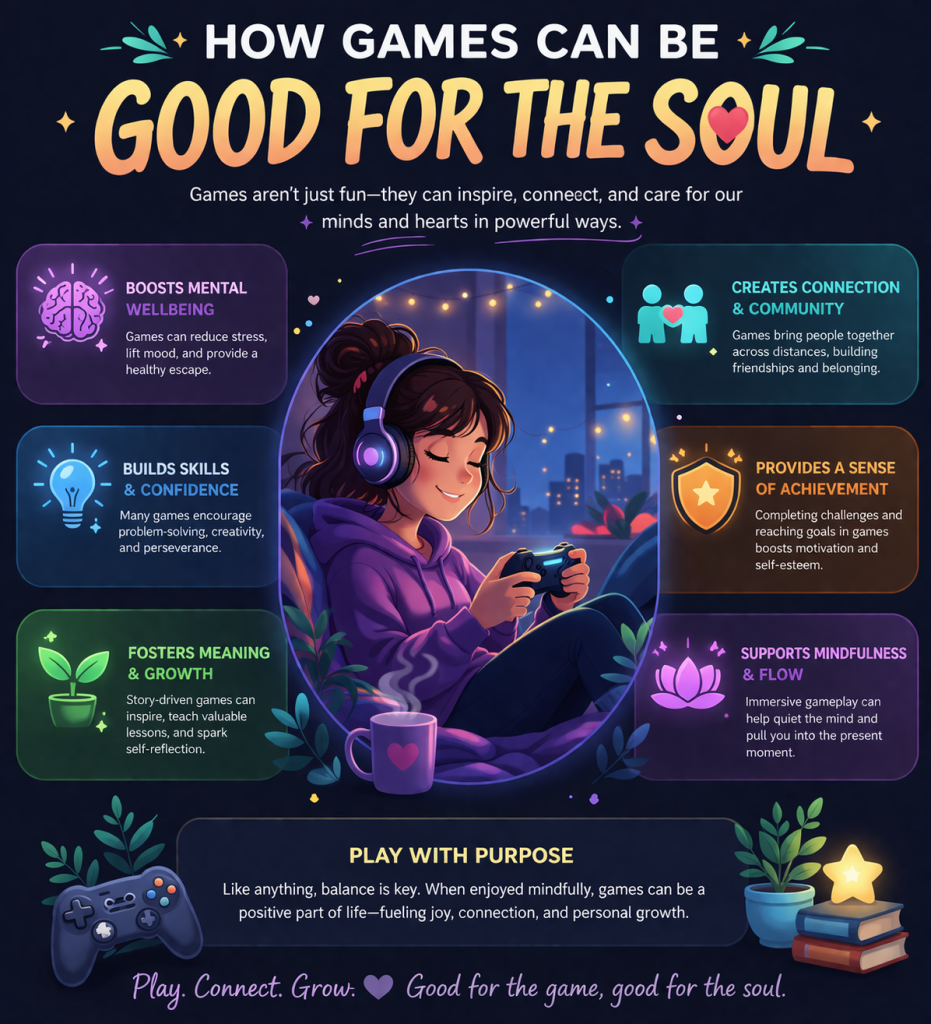
There is something meaningful about play itself. It gives people room to imagine, explore, and enjoy the moment. In that way, video games can do more than entertain. They can lift your mood and make everyday life feel a little brighter.
In the end, video games are more than just something to do when you are bored. They bring together the mind and body through focus, movement, and emotion. They can help students learn useful skills, and they can also give people joy, comfort, and connection. When enjoyed in a healthy way, games can be fun, meaningful, and genuinely good for you.
This makes a lot of sense. 🙂