Can Curriculum Conquistadors and Joystick Jockeys Ever Be One and the Same?
Think with me for just a second. When was the last time you bought a new game?
Great. Now that you have that game in mind, ask yourself a couple questions:
- Was it a game that you knew everything about before you booted it up for the first time?
- Where you able to play it perfectly or time your combos immediately?
- Did you understand the controls without a tutorial?
If you answered any of these questions as “yes”- then good for you! I, for one, cannot claim any of the above achievements.
Later, as I thought about the above questions, I began to wonder something.
Learning a game never feels like a chore (unless it is a game meant to simulate every facet of managing a stellar empire), so why does learning in school?

Learning (videogames) is fun!
It shouldn’t come as much of a surprise to say that regardless of how down-to-earth teachers are, no matter how many literal gold stars they may give out for exceptional effort, or how much students may openly crave their approval, getting that A+ just isn’t the same as the iconic refrain accompanying ACHIEVEMENT UNLOCKED.
In school, even when you do everything “right,” the payoff can feel distant and abstract. Maybe you get a grade next week, maybe you get a comment in the margin, maybe you get a nod while everyone is packing up.
In a game, the payoff is immediate, loud, and shamelessly proud of you.
The screen flashes, the sound hits, the little notification pops up like a victory banner, and for a brief moment the universe agrees that what you just did mattered.
This makes complete sense when a game developers’ main goal is to keep you playing, and how better to keep you hooked than constant positive feedback?
Games hand you goals the way a good coach does: clear, specific, and broken into steps that feel survivable.
They don’t say boring things like, “be better at math.” They say, “reach the checkpoint,” “learn the pattern,” “craft the item,” “beat the boss,” or “solve the puzzle.”
The second you try, the game answers back. Too early? Too late? Wrong input? Wrong strategy? You don’t have to wonder. You get instant information, and the loop tightens: attempt, feedback, adjust, repeat.
It’s not punishment—it’s refinement.
Because discovery is baked into every click—mistakes become learning opportunities, progress feels earned, and curiosity does the heavy lifting.
In a video game you can fail fifty times and still feel like you’re moving forward – all because the game quietly teaches you how to fail productively.

For example:
- You learn the controls without realizing you’re studying.
- You learn timing by chasing rhythm.
- You learn resource management by wanting one more upgrade.
- You learn problem-solving because the next room looks suspicious and your brain can’t leave the question unanswered.
Even frustration gets repackaged into motivation: “I almost had it” is a powerful spell.
And that’s the difference. School often asks you to care first, then rewards you later. Games reward you early, often, and just enough to make you care more. That isn’t childish—it’s effective design.
Believe it or not, video games are good for you, Mr. Ripley.
The APA article The Benefits of Playing Video Games argues that the gaming conversation is usually lopsided.
People zoom in on videogame violence, addiction, and depression—but ignore a growing body of research showing real upsides, especially because modern games are more complex and social than the stereotype suggests.
The authors of the article group the benefits into four big buckets:
- Cognitive
- Motivational
- Emotional
- Social
Cognitive benefits:
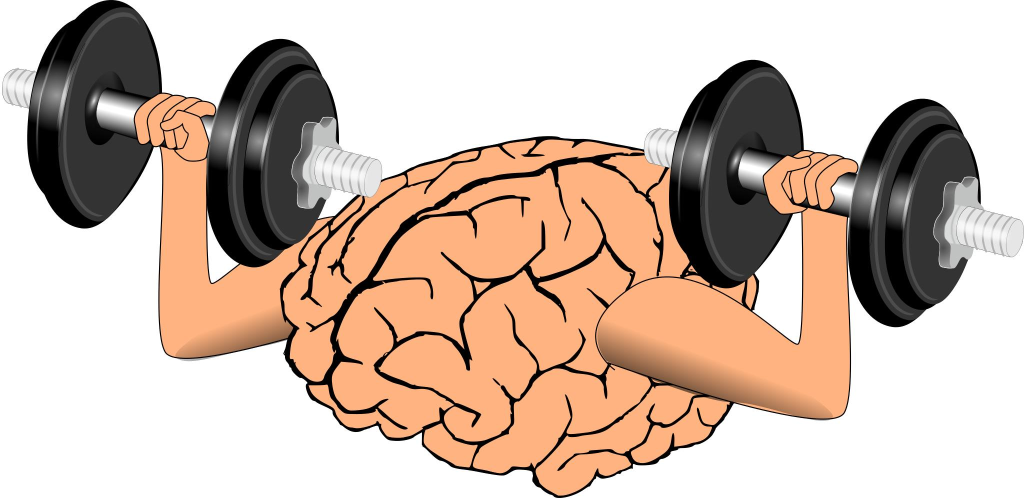
Your brain is doing reps.
Playing games isn’t “brain-off” time. The paper says certain games can sharpen attention and other cognitive skills, and some of those gains can carry into real-world tasks.
Motivational benefits:
Failure stops being fatal.
Game designers basically run a masterclass in persistence: clear goals, fast feedback, repeated attempts, and that rare win that feels earned.
The article argues this structure can build resilience in the face of failure and a more effective motivational style.
Emotional benefits:
Mood management and practice under pressure.
The authors point out that many people play to manage mood—and studies show playing preferred games can boost mood and positive emotions.
More importantly, games also trigger frustration, anxiety, and anger, but in a “safe” setting—meaning players may get to practice emotion regulation while still caring about the outcome.

Social benefits:
Teamwork, leadership, and prosocial behavior.
Modern gaming is deeply social, (shocker, right?) and cooperative play can spill over into real life.
The paper cites findings that cooperative gaming can increase later prosocial/helping behavior, sometimes even more than the game’s “violent vs. nonviolent” label—because the key variable is whether you’re working with people or against them.
School is in session
People with real advanced degrees have already spent real government money learning more about video games in classrooms.
A recent study took the question “Can games actually teach?” and put it in front of the people who live in classrooms every day.
Researchers surveyed 595 teachers in Spain and asked what they really think happens when video games enter a learning environment. The answer wasn’t a skeptical shrug—it was closer to “Yes, but only if you use them right.”
Teachers generally believed games can improve learning, especially when the goal isn’t just “beat the level,” but “figure out the system.”
In other words, the most educational version of gaming isn’t the hyper-competitive sprint to win—it’s the kind of play where students explore, test ideas, and learn why something works (the study calls this epistemic play).
Teachers also felt games are most likely to boost knowledge and skills—learning facts, practicing procedures, building competence—while changing attitudes (like motivation or values) is harder to guarantee.
But here’s the kicker: the teachers most confident about game-based learning were the ones who either already play games themselves or intend to use games in their teaching.
The takeaway feels pretty simple: games can teach, but they don’t teach by magic. They teach best when there’s a clear learning purpose, some structure, and an adult who can turn “cool moment” into “aha, that’s the concept.”
The conclusion
Since there are proven advantages to video game learning, how can we as a nation harness the learning power of video games?
Obviously, there is still stigma surrounding the games industry, and there will always be people who run counter studies because they believe video games are useless.
That is true for anything people care enough about, just as there will always be people who oppose the status quo simply to be contrarian.
However, hesitation should not outweigh opportunity.
If research continues to support game-based learning, educators, developers, and policymakers should collaborate to design curriculum that blends engagement with measurable outcomes—turning play into progress rather than treating the two as opposites.
Citations
Granic, I., Lobel, A., & Engels, R. C. M. E. (2014). The benefits of playing video games. American Psychologist, 69(1), 66–78.https://doi.org/10.1037/a0034857
Pozo, J.-I., Cabellos, B., & Sánchez, D. L. (2022). Do teachers believe that video games can improve learning? Heliyon, 8(6), e09798. https://doi.org/10.1016/j.heliyon.2022.e09798