Boldly Go…
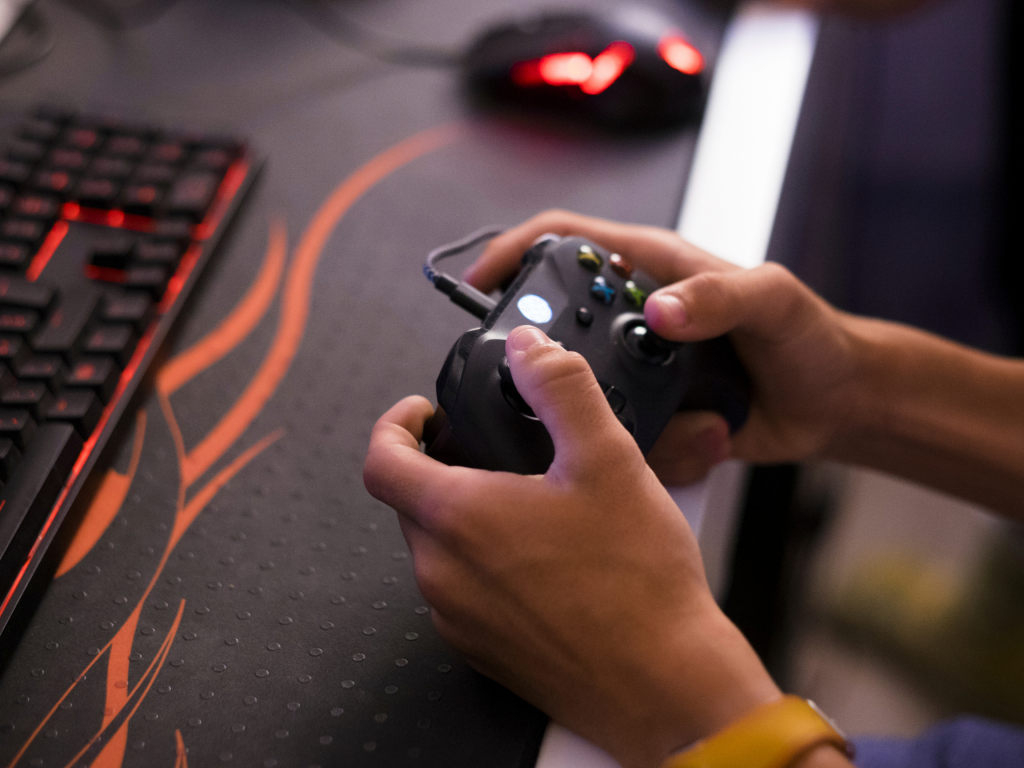
Greetings, Space Rangers, Will here. I’m excited to announce the newest large-scale expansion from Mission Lumen, for our space-age video game, Starship Rangers, a game built to help high school students tackle literacy shortcomings in a way that feels empowering, not remedial.
If you’ve ever watched a teenager light up when they finally “get” a game mechanic, you understand the promise. Games teach players to decode systems, interpret cues, track objectives, and learn from feedback. Mission Lumen channels those strengths into the literacy skills students need for school, work, and everyday life, especially learners who are tired of feeling like reading is something that happens to them instead of something they can control.
Our Mission, Should You Choose to Accept It
Literacy gaps in high school are real, and they come with baggage. By ninth, tenth, or eleventh grade, many students have experienced years of frustration: struggling through assignments, avoiding reading out loud, and feeling singled out by interventions that don’t fit their age or interests. The challenge is not just skill. It’s confidence, identity, and motivation.
Mission Lumen was founded on a simple belief: students learn best when they feel capable and respected. That means no babyish themes, no worksheets disguised as “fun.” Instead, we built a futuristic setting where reading is power, comprehension is survival, and communication is the difference between drifting in silence and reaching the next star.

The Premise: Literacy as a Survival Tool in Space
Starship Rangers places players aboard a deep-space vessel tasked with restoring communication across abandoned outposts. Think long-range scans, damaged archives, mysterious transmissions, and factions that left behind scattered clues. Each mission pushes students to read with a purpose: repair systems, decode messages, negotiate outcomes, or uncover the truth behind a collapsed supply route.
The world is written for high school learners. The tone respects their age, the stakes feel real, and reading is embedded into gameplay. Literacy isn’t a separate “school thing” bolted on. It’s how you progress.
Instead of saying, “Now we’re going to practice comprehension,” the game asks, “Do you want to unlock the navigation array and reach the next sector?” Students quickly discover the most direct route forward is paying attention, making inferences, and pulling meaning from complex text.
What Literacy Support Looks Like in the Game
Starship Rangers targets the pain points that often trip students up in secondary classrooms. It builds vocabulary in context, so students learn words because they need them and see meaning reinforced through repeated use and environmental cues. Missions are paced to build reading stamina without overwhelming students, and the structure includes frequent wins to keep momentum going. Players practice comprehension and inference by reading logs, interpreting transmissions, and connecting evidence across scenes. They also build communication skills, since many missions require students to respond, summarize, or choose precise language to accomplish goals. Finally, the game supports self-correction by allowing retries, reviews, and improved outcomes, so mistakes feel like feedback rather than embarrassment.
Most importantly, the game supports different learners without putting a spotlight on anyone. Students who need more help can access tools. Students who want to move faster can do so.
The Classroom Reality: Educators Need More Than a “Cool Game”
Teachers don’t just need engaging content. They need something usable: clear objectives, flexible pacing, and tools that fit real constraints like bell schedules, mixed reading levels, and limited planning time. Mission Lumen has always been built with classrooms in mind, but this new large version expansion takes that commitment further.
Even the best educational game can fall flat if it’s hard to implement. If teachers have to build the structure from scratch, it becomes one more burden on an already full workload. We want Starship Rangers to feel like a partner, not a project.
The Latest Expansion: DEEPSPACE
This is the part I’m most excited about.
With DEEPSPACE, we’re adding content focused on expanded learning, new player abilities to unlock, and new tools that make Starship Rangers easier to implement in classrooms.
1) Expanded learning content that goes beyond “just reading”
DEEPSPACE broadens what literacy can look like in a game. Students won’t only read to answer questions. They’ll read to build arguments and justify decisions, compare sources and evaluate reliability, detect bias in transmissions and logs, summarize key information under time pressure, and translate complex technical language into clear action steps. Tasks shift toward the kind of thinking students are expected to do across subjects, including English, social studies, and STEM pathways.
2) New player abilities that make growth feel like progression
Players will unlock abilities that turn strategies into tools:
- Scan & Sort: Identify key details, separate signal from noise, organize information.
- Inference Engine: Connect clues across texts and form logical conclusions.
- Context Clues Booster: Support vocabulary learning without interrupting gameplay.
- Transmission Replay: Review critical info and catch what they missed.
The goal is to make literacy strategies feel like upgrades students earn.
3) New educator tools that reduce friction and increase flexibility
DEEPSPACE introduces tools aimed directly at teachers, focused on smoother implementation, clearer progress tracking, and simpler alignment. Classroom-ready mission planning makes it easy to run a mission in 15–20 minutes or extend it into multi-day work. Built-in differentiation offers adjustable supports so mixed reading levels can engage with the same mission. Progress signals provide clearer indicators of what students are improving and where they still need support. Implementation supports help educators integrate the game into existing routines without redesigning their curriculum.
A good educational tool respects teacher time. This expansion is our statement that we take that seriously.
What This Means For Students
When literacy support works, students don’t just improve scores. They change how they see themselves.
Starship Rangers is designed to create a moment for learners who’ve struggled: realizing they can handle complex text when it’s connected to a purpose and supported by tools that work. In space, the player isn’t “behind.” They’re the one saving the mission, making decisions, and piecing together what happened.
What This Means For Classrooms
The game isn’t meant to replace instruction. It’s meant to strengthen it by providing:
- A motivating environment for practice
- Structured experiences that build comprehension habits
- A way to engage students who resist traditional intervention
- A tool educators can use without extra chaos
The expansion’s educator tools support consistent use. Literacy growth comes from repetition, feedback, and increasing challenge over time. The easier Starship Rangers is to implement, the more likely students are to get the steady exposure they need.
Looking Ahead
DEEPSPACE represents a bigger vision from Mission Lumen: a game that can scale with students, support educators, and meet high school learners where they are, not where a textbook assumes they should be.
If you’re an educator, literacy specialist, administrator, or someone who cares about student success, I can’t wait for you to see what’s coming. Expanded learning content. New player abilities. Better classroom tools. A stronger bridge between engagement and real skill development.
Mission Lumen has always been about hope in a high-stakes environment, both in the story and in the classroom. DEEPSPACE pushes that mission further.
We’re not just adding more content. We’re building a better path forward for students who deserve to feel capable again.
And I’m genuinely excited to share it with you.
We have a blog! Click Here to learn more about Mission Lumen.
Questions? Our FAQ Page is up and running!